








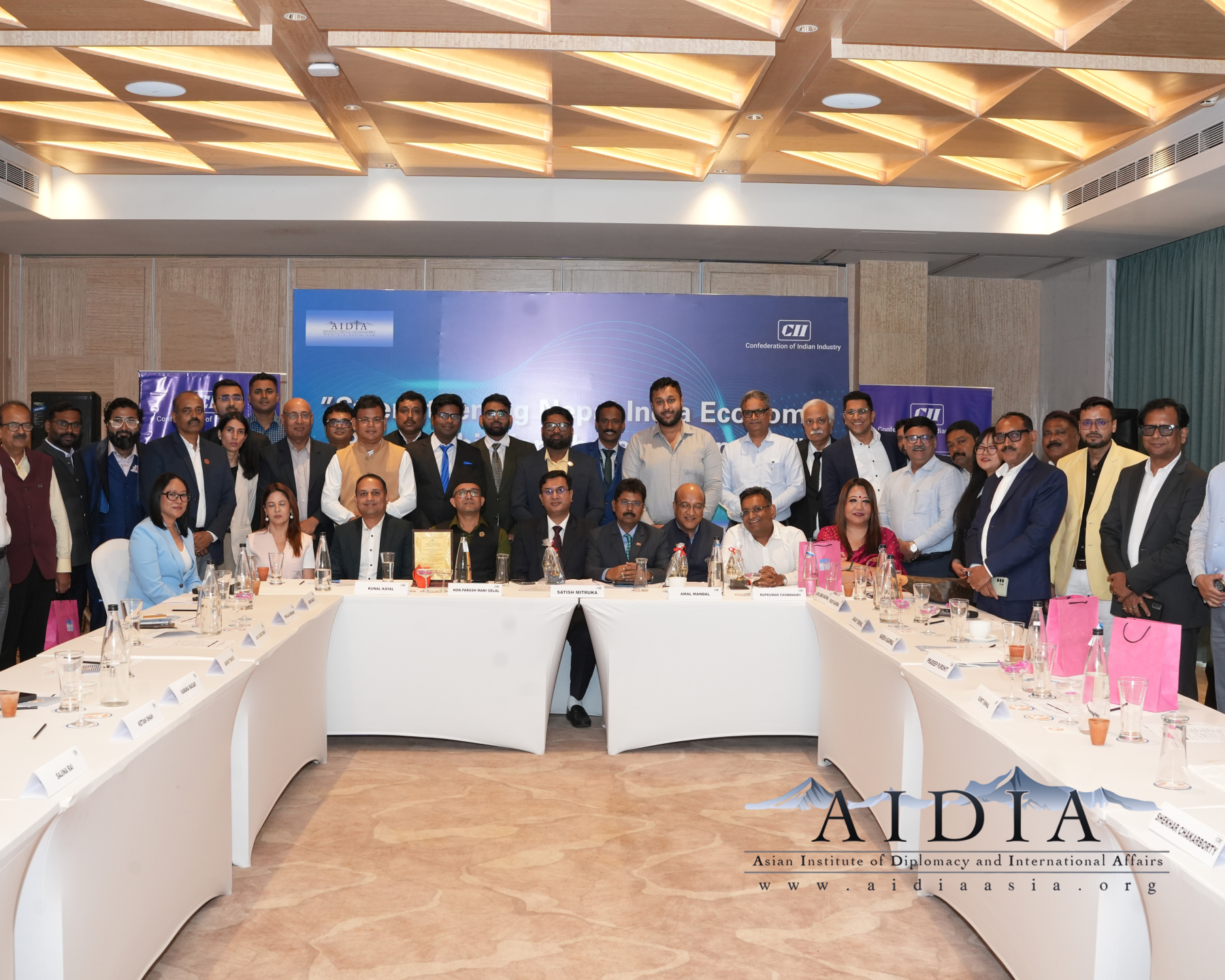
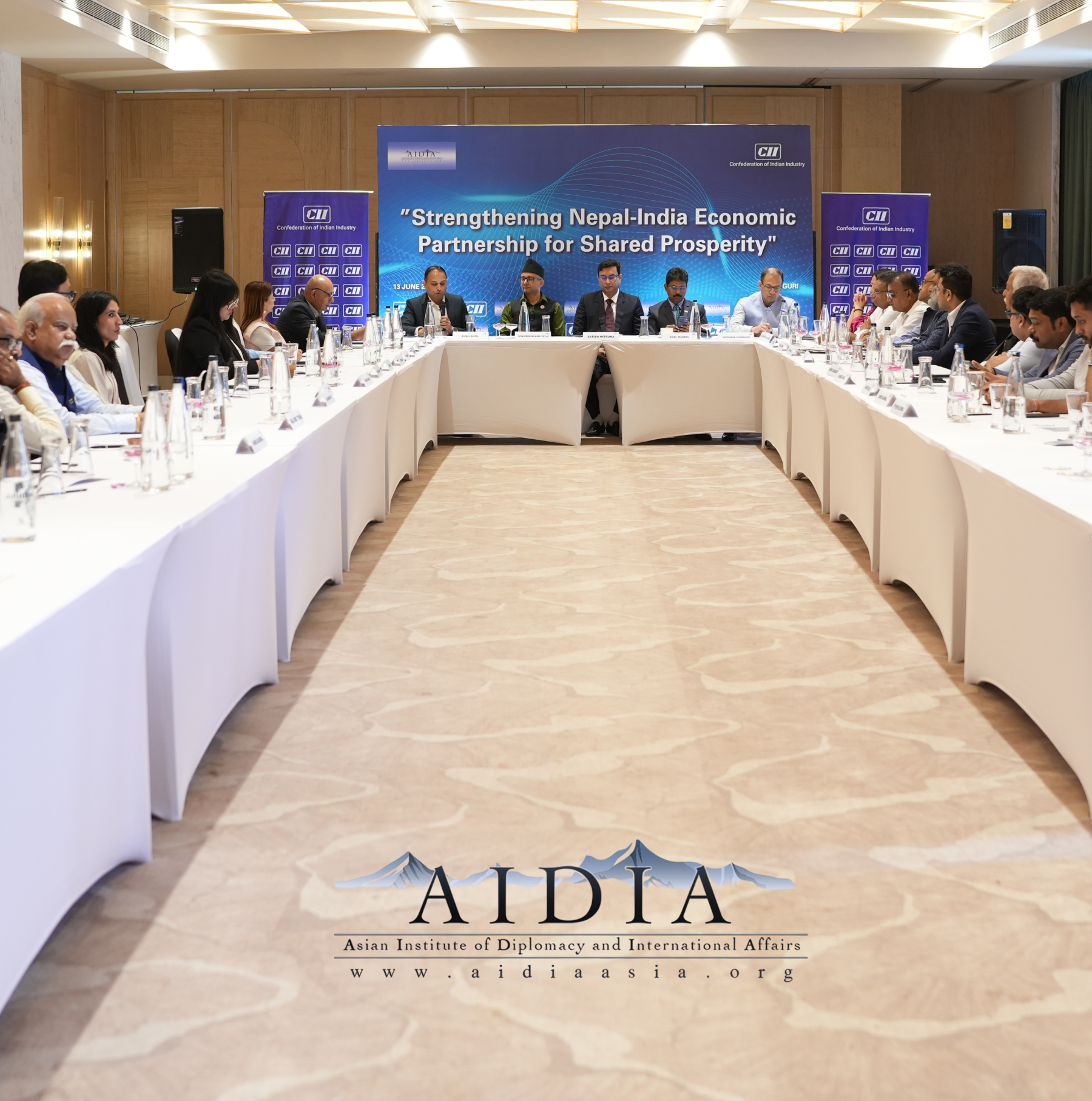
SILIGURI: Business leaders and policymakers from Nepal and India gathered in Siliguri on Saturday for a high-level bilateral dialogue aimed at strengthening Nepal-India economic cooperation and promoting shared prosperity across the region.
The dialogue, held under the theme ‘Strengthening Nepal-India Economic Partnership for Shared Prosperity,’ was jointly organized by Asian Institute of Diplomacy and International Affairs (AIDIA) and Confederation of Indian Industry (CII) North Bengal Zonal Council. Discussions focused on practical and actionable policy initiatives to expand economic cooperation between Eastern Nepal and the Indian state of West Bengal.
In his remarks, vice president of Nepal-India Chamber of Commerce and Industry (NICCI) Kunal Kayal highlighted the unique economic and people-to-people ties between Nepal and India. He emphasized the need to further strengthen institutional collaboration to fully realize the immense economic potential of the bilateral relationship.
Addressing the gathering, chairman of the CII North Bengal Zonal Council Satish Mitruka suggested that such dialogues should be organized regularly in both Kathmandu and Siliguri simultaneously to translate the vast potential between Nepal and India into tangible outcomes.
Similarly, vice chairman of the CII North Bengal Zonal Council Amal Mandal; Supratim (Raj) Basu of Rural Heritage Conservation Tourism; and founder of Kins Hospital Sumit Sinhal highlighted various opportunities for cooperation between Nepal and India in sectors such as tourism, healthcare, and medical education.
The session also witnessed managing director of IEC Group Nepal Shailaja Adhikari; principal of IIAS School of Management Dr KV Rajendran Nair; and chairman of Glocal Pvt Ltd Ashish Thakur shared their perspectives on opportunities and potential collaboration in the education sector between West Bengal and Nepal.
Likewise, senior vice president of the Morang Merchant Association Anil Kumar Shah shared his experience and insights on promoting trade and tourism between Eastern Nepal and West Bengal.
Moderating the session, chair of Real Estate and Logistic Panel, CII North Bengal Zonal Council Laxmi Limbu Kaushal, said that such joint initiatives between AIDIA and CII North Bengal is just a beginning. “It will help bring the business leaders together, where they can share and grow together.”
Delivering the closing remarks, Member of Parliament Parash Mani Gelal outlined the role of his party and the Government of Nepal in promoting trade and economic relations. He also highlighted the initiatives undertaken by the incumbent government to facilitate investment, provide policy support, and strengthen Nepal-India economic cooperation. Encouraging Indian entrepreneurs to invest in Nepal, he emphasized that the current government is committed to creating a business-friendly environment and facilitating private-sector-led growth.
Participants underscored the growing importance of the Nepal-West Bengal Economic Corridor and stressed the need for greater investment in Nepal’s hydropower, tourism, agriculture, manufacturing industries, and special economic zones. They identified education, hospitality, and healthcare as priority sectors for strengthening Nepal-West Bengal economic and trade relations. The participants also called for practical solutions to trade facilitation challenges and stronger partnerships between private-sector stakeholders.
The strategic significance of Siliguri was also highlighted during the discussions. Participants described Siliguri as a vital gateway connecting Nepal, India’s northeastern region, Bhutan, and Bangladesh. They explored ways to leverage the region’s geographic advantages to expand trade, investment, tourism, and cross-border economic integration.
The dialogue concluded with a shared commitment to transform discussions into practical partnerships and investment opportunities that contribute to sustainable economic growth and regional prosperity.
AIDIA has been organizing international forums like Prishtina Dialogue, Nepal-India Think Tank Summit and the recent ‘Strengthening Nepal-India Economic Partnership for Shared Prosperity’ in Siliguri to promote Economic Diplomacy, according to AIDIA founder Sunil KC.
The key reasons for organizing this dialogue is the historical role of West Bengal as one of the earliest and most committed sources of Indian investment in Nepal. Companies associated with West Bengal – including Surya Nepal, Asian Paints Nepal, Berger Paints Nepal, and Dabur Nepal – entered the Nepali market during the 1990s and remain among the country’s most trusted brands today.
These companies have not only generated profits but have also built the foundation of trust that underpins Nepal-India economic relations, he said, adding that the recently established foreign direct investment (FDI) project Obeetee Nepal is also backed by a company headquartered in West Bengal, further demonstrating the state's continued role in fostering economic cooperation between the two countries.
 |
 |